How Property Owners Search for Tree Services
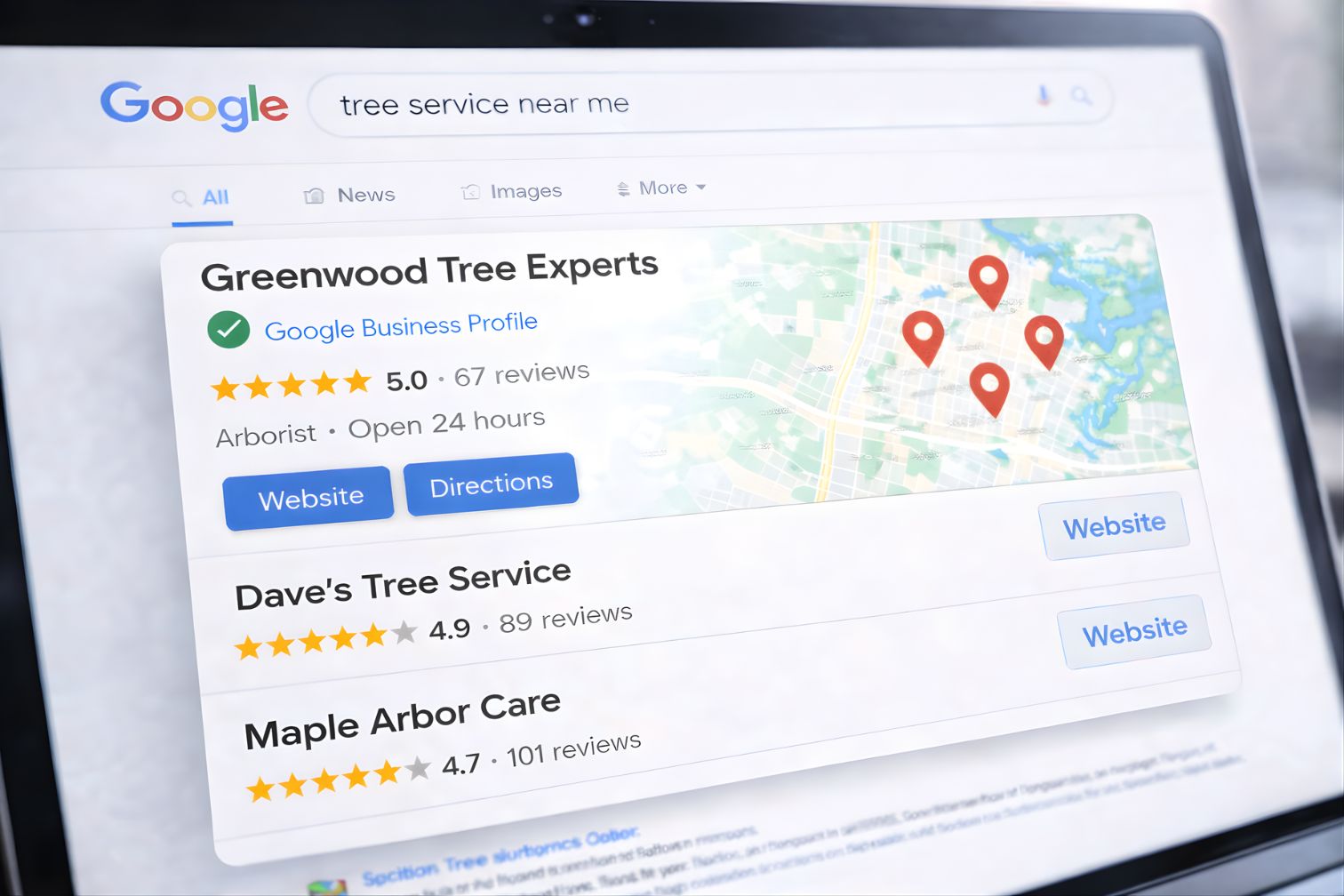
Tree service is a business built on visibility at the exact right moment. When a massive oak is leaning toward someone's house after a storm, they aren't comparing websites for a week. They search "emergency tree removal near me" and call the first company that picks up. When a homeowner notices a dead limb hanging over their driveway, they type "tree trimming service" into Google and scan the map pack for someone nearby with good reviews. The search behavior in this industry is overwhelmingly local, mobile, and action-oriented.
What makes tree service SEO unique is the wide range of job values. A basic trimming job might be $300 to $800. A large tree removal with stump grinding can run $2,000 to $8,000 or more, especially if crane work is involved. Emergency storm cleanup can be even higher. The keywords that attract those larger jobs are the ones worth investing in, because a single lead can cover months of SEO costs.
The competitive landscape varies significantly by market. In suburban and rural areas, there may be 10 to 20 tree service companies competing. In larger metro areas, the number can exceed 100. Many tree service businesses are small operations that rely entirely on word of mouth, Craigslist, and yard signs. This creates a real opportunity for companies willing to invest in local SEO, because the barrier to standing out is lower than in industries like HVAC or plumbing where SEO adoption is higher.
Google Maps dominates the results for virtually every tree-related search. The three businesses in the map pack receive the overwhelming majority of clicks and calls. Below the map pack, the organic results capture the research-oriented traffic — homeowners looking for cost estimates, species identification, or permit requirements before committing.
Why Local SEO Is Different for Tree Service Businesses
Tree service companies face a combination of challenges that don't apply to most other home service industries. Seasonality plays a major role. Spring and fall are the busiest seasons for planned trimming and removal work. But storm damage creates unpredictable spikes in demand — a single severe weather event can generate weeks of emergency work. Companies that rank well before a storm capture those leads without paying a premium. Companies that aren't ranking miss the window entirely.
The visual nature of the work is a ranking asset most companies waste. Tree removal and trimming produce dramatic before-and-after transformations. These photos are exactly what Google wants to see in your Business Profile and what potential customers want to see before hiring someone to work on their property. Yet most tree companies never upload a single photo of their work.
Service area breadth is a double-edged sword. Many tree companies serve a large geographic radius — 30, 40, even 50 miles from their base. Google's algorithm favors proximity, meaning you'll rank more easily for searches close to your listed address and less easily for searches at the edge of your territory. Your strategy needs to account for this by building location-specific pages and earning reviews that mention different service areas.
Licensing and insurance sensitivity is high. Property owners are acutely aware that tree work is dangerous and that an uninsured crew could leave them liable for injuries. Prominently displaying your licensing, insurance, and ISA certifications on your website and Google Profile builds trust and differentiates you from fly-by-night operators who saturate the market after every storm.
High-Intent Keywords for Tree Service Companies
Removal Keywords
The highest-value terms in this industry center around removal: "tree removal near me," "tree removal cost," "large tree removal service," "dead tree removal," and "emergency tree removal." These searches signal a homeowner ready to spend. Each of these deserves a dedicated page that addresses the specific concerns of that searcher — permitting, cost factors, equipment used, and timeline.
Trimming and Maintenance Keywords
Recurring revenue terms include "tree trimming service," "tree pruning near me," "hedge trimming," and "tree maintenance service." These customers are often easier to convert and frequently become repeat clients. Position your trimming pages around seasonal timing — explaining when different species should be pruned for optimal health.
Emergency and Storm Keywords
"Emergency tree removal," "storm damage tree service," "fallen tree removal," "tree on house," and "24-hour tree service" spike dramatically after severe weather. Having these pages indexed and ranking before storm season means you capture demand when it surges. Companies that build these pages reactively are always too late.
Specialty Service Keywords
Terms like "stump grinding," "stump removal cost," "lot clearing service," "land clearing contractor," and "tree cabling and bracing" target customers with specific needs that most competitors don't address with dedicated pages. These lower-competition keywords are often the fastest wins in tree service SEO.
Google Maps Strategy for Tree Service Companies
Set your primary category to "Tree service."Google Business Profile Optimization Checklist
Photos are your biggest competitive advantage. Upload action shots of your crew operating cranes, before-and-after shots of cleared lots, close-ups of clean cuts on large trees, and photos of your equipment. Tree work is inherently visual and dramatic. Use that. Aim for 10 or more new photos per month to signal freshness to Google.
Review strategy should emphasize detail. Encourage customers to mention the specific service — tree removal, stump grinding, storm cleanup — and the area where the work was done. These keyword-rich reviews improve your ranking for those specific terms and locations. Our local SEO services include review strategy and management.
Post seasonal content through Google Posts. In early spring: "Now booking tree trimming and deadwood removal." Before hurricane season: "24-hour emergency storm damage cleanup available." In fall: "Schedule your pre-winter tree inspection." These posts keep your profile active and relevant.
On-Page SEO for Tree Service Websites
Your website needs individual pages for every distinct service you offer. A generic "Our Services" page that briefly mentions trimming, removal, and stump grinding will never rank for any of those terms individually. Google needs focused, detailed pages to understand what you do and match you with the right searches.
At minimum, create separate pages for: tree removal, tree trimming and pruning, stump grinding, emergency tree service, lot and land clearing, and any specialty services like cabling, deep root fertilization, or disease treatment. Each page should be 800 to 1,200 words with original content that explains the process, typical costs, and when the service is needed.
Build city pages for your top service areas. A page targeting a specific suburb should mention the types of trees common in that area, any municipal permit requirements for tree removal, and ideally reference completed projects in that community. This geographic specificity helps Google understand your relevance for searches in those locations.
Use LocalBusiness schema markup with your service type, service area, and operating hours. Add FAQ schema to any FAQ sections for potential rich snippet visibility. Ensure every page has your phone number prominently displayed with click-to-call functionality on mobile.
Common SEO Mistakes Tree Service Companies Make
No online presence beyond a Facebook page. Many tree companies operate exclusively through Facebook and word of mouth. Without a website, you can't rank in organic search. Without a Google Business Profile, you can't appear in the map pack. You're invisible to every homeowner who starts their search on Google.
Ignoring stump grinding as a standalone keyword. Stump grinding is one of the most frequently searched tree-related terms, yet most companies bury it as a bullet point on a general services page. A dedicated stump grinding page with pricing information and before-and-after photos can capture hundreds of monthly searches with relatively low competition.
No emergency service pages. Storm damage generates the highest-value, most urgent leads in the tree industry. If you don't have a page optimized for "emergency tree removal" and related terms, you're surrendering those leads to competitors who do.
Failing to document work photographically. Every job site is a content opportunity. Before-and-after photos serve double duty: they provide Google Business Profile content and website imagery that convinces potential customers of your capabilities.
Not pursuing arborist directory listings. Links from ISA (International Society of Arboriculture), TCIA (Tree Care Industry Association), and state arborist associations carry significant domain authority and industry relevance. Most tree companies don't realize these directories exist or that they're eligible for inclusion.
Case Example: Tree Service Company Growth
A family-owned tree service company with two crews was generating most of its work through referrals and a basic Facebook page. They had a one-page website and 22 Google reviews. We built a 15-page website with dedicated pages for each service, created city pages for their 10 primary service areas, optimized their Google Business Profile with professional project photos, and implemented a review automation system. Results over 8 months: They went from zero map pack rankings to appearing in the top 3 for 14 target keywords. Monthly organic calls increased from 8 to 67. They hired a third crew within 6 months to handle the increased volume. Total revenue grew 85% year-over-year.
DIY Action Plan for Tree Service SEO
- Claim and optimize your Google Business Profile. Set your category to "Tree service." Add every service you offer, define your service areas precisely, write a keyword-rich description, and upload at least 20 photos of completed work.
- Build a real website. If you only have a Facebook page, invest in a proper website. Even a well-structured 8 to 10 page site will dramatically improve your visibility. Include separate pages for tree removal, trimming, stump grinding, and emergency service at minimum.
- Photograph every job. Take before-and-after photos of every project. Upload the best ones to your Google Business Profile weekly and use them on your website. This single habit will improve both your map pack ranking and your conversion rate.
- Build your review count. After each completed job, send the customer a text with your Google review link. A tree company with 100+ reviews and a 4.7+ rating will dominate most local markets where competitors have 15 to 30 reviews.
- Create city-specific pages. For each city or town you regularly serve, build a landing page that mentions the area by name, discusses common tree issues in that community, and links to your core service pages.
- Get listed in industry directories. Apply for ISA and TCIA member directories if you hold certifications. List on Yelp, Angi, HomeAdvisor, and your local BBB. Ensure your name, address, and phone are consistent across all listings.
- Build a storm preparedness page. Create content that helps homeowners assess tree hazards, understand what to do after storm damage, and know when to call a professional. This page earns organic traffic year-round and becomes a lead magnet after severe weather.
Explore More Industries
See how local SEO strategies differ across industries.
FAQs: SEO for Tree Service Companies
How long does SEO take for a tree service company?
In most markets, tree service SEO produces noticeable results faster than more competitive industries. Initial ranking improvements typically appear within 2 to 3 months. Significant map pack visibility develops between months 4 and 7. Tree service is less saturated from an SEO perspective than plumbing or HVAC, which means disciplined effort produces results relatively quickly.
Do I need a website or is a Facebook page enough?
A Facebook page is not a substitute for a website. Facebook doesn't rank in Google's map pack or organic results for service-related searches. A website gives Google the content it needs to understand what you do and where you do it. Without one, you're invisible to the majority of homeowners searching for tree services online.
Is Google Ads or SEO better for tree service companies?
Google Ads can generate immediate calls, but tree service keywords are expensive and leads stop when the budget runs out. SEO builds a sustainable pipeline over time. Many of our tree service clients start with a small ads budget for immediate leads while SEO builds momentum, then reduce or eliminate ads once organic rankings are producing consistent calls.
How important are Google reviews for ranking?
Extremely important. Reviews are one of the strongest local ranking signals. In the tree service industry specifically, reviews with photos carry extra weight — both with Google's algorithm and with potential customers who want to see the quality of your work before hiring you. Aim for consistent monthly review growth rather than occasional bursts.
What does SEO cost for a tree service business?
Local SEO for tree service companies typically ranges from $800 to $2,500 per month depending on your market's competitiveness and the scope of work. Given that a single tree removal job can be worth $2,000 to $8,000, the ROI on effective SEO is among the highest of any local service industry. Most clients see a positive return within 4 to 6 months.
Should I target commercial tree service keywords?
Absolutely. Commercial tree work — property management contracts, HOA maintenance, municipal work — is less competitive from an SEO perspective and often involves recurring revenue. Even two or three pages targeting "commercial tree service [city]" and "HOA tree maintenance" can generate profitable leads that most competitors aren't pursuing online.