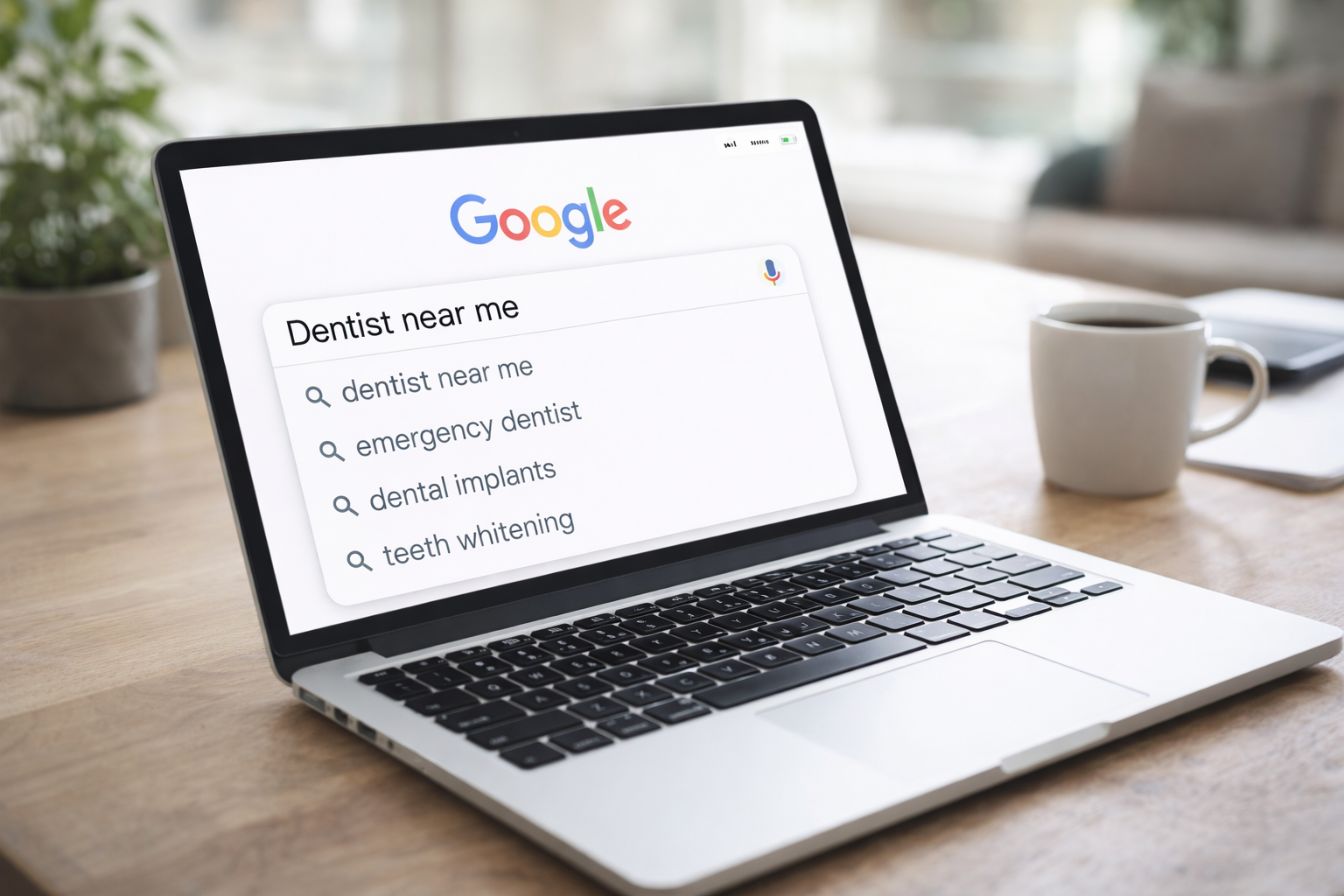
How Patients Search for Dentists
Dental search behavior splits into three distinct categories: new patient searches, emergency searches, and cosmetic or elective procedure research. A person who just moved to a new city searches "dentist near me" and makes a decision within 24 hours. Someone with a cracked tooth at 10 PM searches "emergency dentist" and calls whoever appears first. A patient considering veneers spends weeks researching before booking a consultation.
Each of these search paths represents a different patient value. A new patient who stays for routine care is worth $1,500 to $3,000+ over their lifetime. An implant patient is worth $3,000 to $6,000 in a single treatment plan. The practices that rank for all three search categories build the most profitable and predictable patient pipelines.
Most dental practices spend $3,000 to $10,000 per month on Google Ads, paying $30 to $80+ per click for terms like "dentist near me." Organic rankings for the same keywords deliver the same patients at zero cost per click, month after month.
The practices dominating local search are not always the best clinically. They are the ones who invested in their online presence early and consistently. The good news: most dental markets still have significant ranking opportunities because the majority of practices have weak or outdated websites.
General Dentistry
Cleanings, exams, fillings. $200-$500/visit, recurring 2x/year.
Emergency
Cracked teeth, abscesses, pain. $300-$1,500/visit, converts to ongoing care.
Cosmetic
Veneers, whitening, bonding. $500-$15,000+ per treatment plan.
Implants & Surgery
Implants, extractions, bone grafts. $3,000-$6,000+ per case.
Why Local SEO Is Different for Dental Practices
The new patient acquisition cost changes everything. Dental PPC costs $30 to $80+ per click, meaning a single new patient from Google Ads can cost $200 to $500+ after accounting for conversion rates. A single first-page organic ranking can deliver 20 to 50 new patient inquiries per month at zero marginal cost.
Cosmetic and elective procedures have the longest research cycle and highest value. A patient considering dental implants ($3,000 to $6,000) or a full set of veneers ($10,000 to $25,000) will research for weeks or months. The practice that provides the most helpful, transparent content during that research phase earns the consultation.
Insurance acceptance drives a significant portion of searches. "Dentist that accepts [insurance name]" and "Delta Dental dentist near me" are high-intent searches that most practices fail to target. Creating insurance-specific pages captures patients who have already decided to book and are simply looking for an in-network provider.
Dental anxiety is a real search category. Millions of adults avoid the dentist due to anxiety. "Sedation dentistry near me" and "gentle dentist [city]" represent an underserved population actively looking for a practice that will accommodate their fear. Content addressing dental anxiety converts these patients at remarkably high rates.
High-Intent Keywords for Dental Practices
| Keyword | Intent | Patient Value |
|---|---|---|
| dentist near me | High | $1,500+ lifetime |
| emergency dentist [city] | Emergency | $300-$1,500 visit |
| dental implants near me | High | $3,000-$6,000 per implant |
| teeth whitening [city] | High | $300-$800 procedure |
| veneers cost [city] | High | $800-$2,500 per tooth |
| Invisalign dentist near me | High | $3,000-$7,000 case |
| sedation dentistry near me | High | High-anxiety, loyal patients |
| [insurance] dentist near me | High | Pre-qualified by insurance |
| pediatric dentist [city] | Medium | Family = multiple patients |
| dental crowns near me | High | $800-$1,500 per crown |
The biggest opportunity most practices miss is procedure-specific content. "Dental implants [city]" and "Invisalign [city]" have enormous search volume, but most practices list these as bullet points on a single "Services" page. A dedicated 800+ word page for each procedure captures these high-value searches.
Insurance-specific pages are almost entirely uncontested. "Delta Dental dentist [city]" and "Cigna dentist near me" are searched thousands of times per month. A simple page listing accepted insurance plans with a call to action generates some of the highest-converting traffic available.
Google Maps and Map Pack Strategy for Dentists
"Dentist near me" is one of the most searched local service terms in any market. The three map pack positions receive the vast majority of clicks. Here is what a winning position looks like:
Review content matters enormously in dentistry. Reviews mentioning pain-free experiences, gentle care, and friendly staff convert anxious patients who might otherwise delay treatment indefinitely.
Google Business Profile Optimization Checklist
- Primary category: "Dentist" for general practices. "Cosmetic dentist," "Pediatric dentist," or "Oral surgeon" if that is your primary focus.
- Secondary categories: Add "Dental clinic," "Dental implants provider," "Cosmetic dentist," "Emergency dental service" as applicable
- Services list: Add every procedure: cleanings, exams, fillings, crowns, implants, veneers, whitening, Invisalign, root canals, extractions, sedation dentistry, pediatric dentistry
- Insurance information: List every accepted insurance plan in your business description. This matches insurance-specific searches.
- Business description: Mention your specialties, technology (digital X-rays, same-day crowns), sedation options, insurance accepted, and languages spoken within 750 characters
- Photos: Modern, clean office photos. Smiling team photos. Treatment rooms with visible technology. Before-and-after cosmetic results (with patient permission). Upload 10+ new photos monthly.
- Review solicitation: Call patients 24 to 48 hours after significant procedures. Ask how they are feeling and if they have questions. Then request a Google review. Personal follow-up calls convert 3-5x better than automated texts.
- Google Posts: Post weekly with oral health tips, new patient specials, technology spotlights, and team introductions
- Q&A section: Seed common questions: "Do you accept [insurance]?", "Do you offer sedation?", "Are you accepting new patients?", "Do you see children?"
- Review responses: Respond to every review within 24 hours. Thank the patient and mention the positive experience they described.
On-Page SEO Strategy for Dental Websites
Recommended Page Structure
Procedure Pages
Dental implants, veneers, Invisalign, whitening, crowns, root canals, extractions, dentures. One page per procedure with costs, process, recovery, and candidacy information.
Emergency Dental Care
Critical page for after-hours searches. List emergency symptoms, your availability, what to do while waiting, and how to reach you. This page alone can generate 15 to 30 calls per month.
Insurance Pages
Individual pages for each major insurance plan you accept. "Delta Dental dentist [city]" and "Cigna dental near me" are high-intent, low-competition searches most practices completely ignore.
Patient Experience Pages
Sedation dentistry, dental anxiety, first visit expectations, financial options. These pages convert patients who are on the fence about booking.
Before-and-After Gallery
Cosmetic cases with photos and descriptions. This is the highest-converting content for veneers, whitening, and smile makeover searches. Builds credibility that text alone cannot.
City Landing Pages
Target surrounding cities and neighborhoods. Reference local community ties and proximity. "Dentist in [neighboring city]" captures patients just outside your immediate area.
Each procedure page should be 800 to 1,500 words covering what the procedure involves, who is a good candidate, expected costs, recovery timeline, and before-and-after examples. Patients researching procedures want thorough answers before they pick up the phone.
Add Dentist and LocalBusiness schema markup. Include FAQ schema on procedure pages. Make your phone number click-to-call on every page. Add an online scheduling link if your practice management software supports it.
Common SEO Mistakes Dental Practices Make
One "Services" page for everything. Listing implants, veneers, cleanings, and emergency care on a single page prevents Google from understanding your depth of expertise. A patient searching "dental implants [city]" needs a dedicated page, not a bullet point buried in a list.
No insurance-specific pages. "Delta Dental dentist [city]" is searched hundreds of times per month in every metro area. Patients with insurance have already decided to go to the dentist. They simply need to find an in-network provider. This is the easiest traffic to convert.
Ignoring dental anxiety content. An estimated 36% of the population has dental anxiety, and 12% have dental phobia. These patients are actively searching for practices that will accommodate their fear. "Sedation dentist" and "gentle dentist" pages capture a population your competitors are ignoring.
No pricing transparency. Dental costs are a major source of anxiety. Practices that publish price ranges ("dental implants: $3,000 to $5,500 per tooth, depending on complexity") attract patients who appreciate honesty and are more likely to accept treatment plans.
Outdated website design. Dental patients judge clinical quality by website quality. A website that looks like it was built in 2012 signals a practice that has not invested in modern care. Mobile-first, fast-loading design is not optional.
Relying on directory listings. Healthgrades, Zocdoc, and dental directories charge $500 to $3,000+ per month and own the patient relationship. Your own website and Google presence let you control the experience and eliminate the middleman.
Case Example: Dental Practice Results
A 4-operatory general practice in a competitive suburban market was spending $5,500/month on Google Ads generating 25 to 35 new patient calls at $45 to $70 per lead. Their website had 6 pages, no procedure-specific content, and no insurance information. We built 10 procedure pages, 5 insurance-specific pages, an emergency dental page, a sedation dentistry page, and launched a personal post-procedure follow-up call review program. Results over 9 months: Map pack visibility grew from 4 to 48 keywords. Organic new patient inquiries increased from 15 to 85 per month. Google Ads spend was reduced to $2,000/month. The insurance pages alone generated 20+ new patient calls per month from pre-qualified, in-network patients. The implant page generated 8 to 12 consultation requests per month at $3,500+ average case value. Total estimated annual revenue impact from organic search exceeded $450,000.
DIY Action Plan
- Optimize your Google Business Profile using the checklist above. Add every service, list accepted insurance plans in your description, and upload 20+ photos of your modern office.
- Build procedure-specific pages for your top 8 to 10 services. Implants, veneers, Invisalign, whitening, crowns, root canals, emergency care, sedation, cleanings, pediatric. 800+ words each with pricing ranges.
- Create insurance-specific pages. One page per major insurance plan you accept. Target "[insurance name] dentist [city]." These are the lowest-competition, highest-conversion pages you can build.
- Write a sedation/dental anxiety page. Address the fear directly. Explain your sedation options, what a first visit looks like, and how you accommodate anxious patients. This page builds trust with a population that desperately wants to find a dentist they can handle.
- Start your review program. Call patients after significant procedures. Ask how they are feeling. Then request a Google review. Encourage them to mention their experience with pain, comfort, and the team. Target 15+ new reviews per month.
- Build a before-and-after gallery for cosmetic cases. Photos with brief descriptions convert cosmetic patients at dramatically higher rates than text alone.
- Earn local backlinks. Sponsor school sports teams, partner with orthodontists for referrals, join your chamber of commerce, contribute dental health content to local publications.
Explore More Industries
See how local SEO strategies differ across industries.
FAQs: SEO for Dentists
How long does dental SEO take to show results?
Insurance-specific and procedure pages for less competitive terms can rank in 2 to 4 months. Map pack placement for "dentist near me" in competitive markets typically develops between months 4 and 8. Emergency dental pages often rank faster due to lower competition for after-hours searches.
Is dental SEO worth the investment compared to Google Ads?
Dental PPC costs $30 to $80+ per click with conversion rates of 5 to 15%. That means each new patient lead costs $200 to $500+ through ads. Organic rankings deliver the same patients at zero per-click cost, and the results compound over time rather than stopping when you pause the budget.
How do I compete with corporate dental chains?
Corporate chains struggle with the same weaknesses across every market: high staff turnover, impersonal experiences, and generic content. An independent practice with consistent doctors, personal follow-up, heartfelt reviews, and deep procedure content builds trust that chains structurally cannot replicate.
What does dental SEO cost?
Typically $1,500 to $3,000 per month depending on market size and competition. Given that a single implant case covers multiple months of SEO investment, most practices achieve positive ROI within 3 to 4 months of improved rankings. View our SEO packages for details.
Should I create content for every procedure I offer?
Yes, starting with the highest-value procedures first: implants, veneers, Invisalign, and cosmetic services. Then expand to general and preventive care. Each page is a new ranking opportunity and a new patient acquisition channel. An SEO consulting session can help you prioritize based on your market and competition.
How important are reviews for a dental practice?
Reviews are the single most influential factor in a patient's choice of dentist. Practices with 200+ reviews and a 4.8+ rating dominate both the map pack and patient trust. Reviews that mention pain-free experiences and friendly staff are especially powerful for converting anxious patients. Explore our local SEO services to see how we build review programs for dental practices.